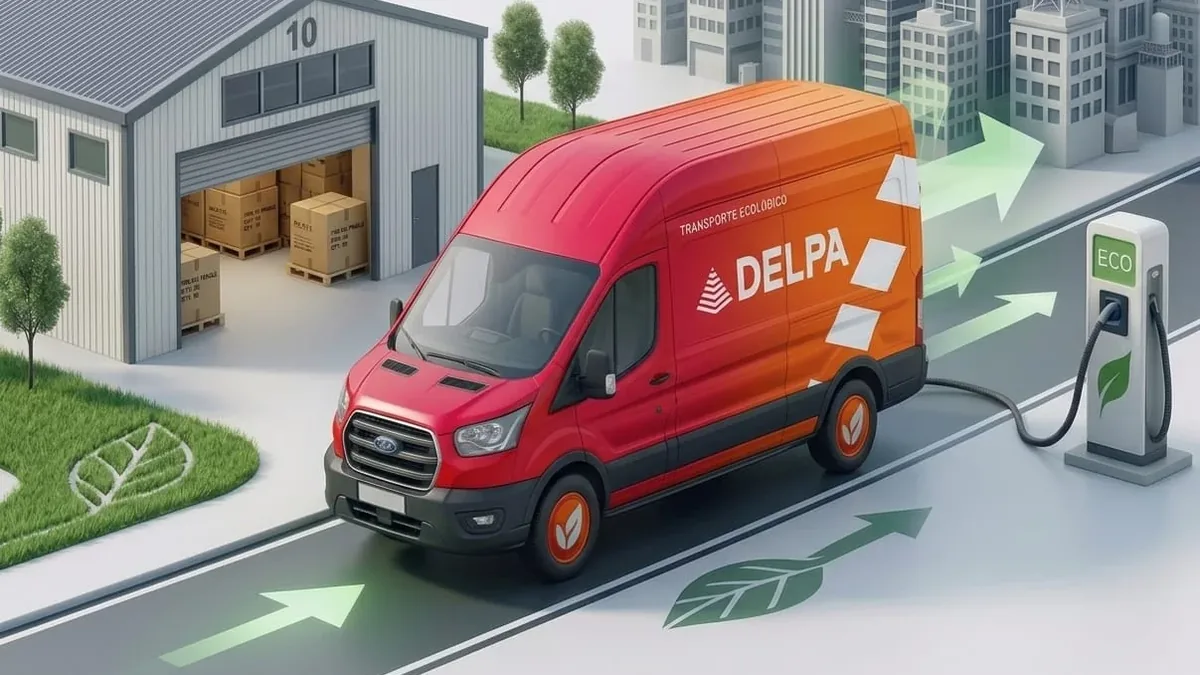
Fleet electrification is the concrete response Delpa Group chose to rising fuel prices in its distribution within Chile. In April 2026 the company reported six electric vans in operation and a commitment to add two more that year, made under Chile's Electromobility Agreement.
This article explains what changes in cost and operations when a delivery fleet moves away from diesel. It draws on weekly reports from ENAP, Chile's state oil company, electricity regulation from the National Energy Commission (CNE) and the spec sheet of an electric delivery van sold in Spain (Maxus eDELIVER 9), with the date of each figure.
Contents
- Diesel prices in Chile are reviewed every week
- From price per liter to cost per kilometer
- Electricity rates are set every six months, and charging time matters too
- What changes when a delivery fleet goes electric
- March 2026: the Electromobility Agreement and two more vans
- What Delpa Group expects from its electric fleet
Diesel prices in Chile are reviewed every week
Every Wednesday ENAP publishes a report of estimated fuel prices. The estimate takes into account import prices on the US Gulf Coast, the cost of shipping fuel to Chile and the rules of the Mepco and FEPP stabilization mechanisms (ENAP, 2026).
ENAP makes clear that it does not set retail prices. Distributors adjust the final price on their own, based on that report.
In the September 30, 2026 report, the estimated change in diesel was 95 Chilean pesos per liter. The October 21 report added another 91.5 pesos per liter, while the November 4 report showed no change (ENAP, 2026).
Those two estimated changes add up to 186.5 pesos per liter in three weeks. How the Mepco works and how fuel costs pass into freight rates is covered in how to protect your margin as fuel pressure returns.
The exposure has a clear source. "Chile imports about 95% of the crude it consumes," wrote Sebastián Luque, CEO of Enerlink, in an April 2026 column (BioBioChile, 2026).
From price per liter to cost per kilometer
For a delivery fleet, the number that matters is energy cost per kilometer. You get it by dividing the energy price by the vehicle's efficiency, in kilometers per liter for diesel or kilometers per kilowatt-hour for electric.
With a diesel van that does 10 kilometers per liter, an example assumption, every 10-peso increase per liter adds 1 peso per kilometer. ENAP's estimated changes for October 2026 amount to roughly 18.7 more pesos for every kilometer driven.
On the electric side, Maxus Spain's spec sheet for the eDELIVER 9 van lists consumption of 30.2 to 32.4 kWh per 100 km in the WLTP combined cycle. At that consumption, cost per kilometer depends mainly on the contracted rate and the time of charging.
| Variable | Diesel van | Electric van |
|---|---|---|
| Energy unit | Liter of diesel | Kilowatt-hour (kWh) |
| Reference price review | Weekly, ENAP report | Every six months for regulated customers, CNE |
| Reference consumption | 10 km per liter (example assumption) | 30.2 to 32.4 kWh per 100 km (maker's spec sheet) |
| Recent reference | +186.5 pesos per liter in ENAP's estimated change (effective October 1 and 22, 2026) | Node price set every six months for regulated customers (CNE) |
| Effect on cost per km | About 18.7 more pesos per km at 10 km per liter | Depends on the contracted rate and charging time |
The table does not compare absolute prices, which depend on each company's contract. It shows how often the reference for each energy source changes, which is what drives cost predictability.
Electricity rates are set every six months, and charging time matters too
Chile's National Energy Commission sets regulated electricity prices every six months. In October 2026 it published the preliminary technical report on the average node price for the first half of 2027 (CNE, 2026).
That gives regulated electricity a six-month horizon, compared with the weekly review of diesel. Predictability is higher but not complete, because a company may be on an unregulated rate or one with demand charges.
In his column, Sebastián Luque explains that the cost of energy depends heavily on peak consumption recorded during peak hours. At a little-used charging station, that can triple the cost per kilowatt-hour compared with a high-demand one (BioBioChile, 2026).
For a delivery fleet, the practical takeaway is to charge at the depot outside peak hours. The eDELIVER 9 spec sheet lists 7 to 12 hours for a full AC charge, or 36 to 45 minutes to reach 80% with fast charging.
What changes when a delivery fleet goes electric
Range becomes a planning variable. According to Maxus's spec sheet for the version sold in Spain, the eDELIVER 9 covers 186 to 296 km (about 116 to 184 miles) in the WLTP combined cycle depending on the battery, although the configuration may vary by market. Routes are built to return to the depot before the battery runs out.
The battery also affects payload. On the long body (L3H2), the spec sheet gives a 1,160 kg payload with the 52 kWh battery versus 860 kg with the 89 kWh one.
That is why urban delivery is where an electric fleet fits most easily. Routes are short and repetitive, with frequent stops and a daily return to the warehouse.
How Delpa Group added its first last-mile electric vehicles is described in its investment in electric vehicles for last-mile logistics. The current service is described on the national distribution and last-mile page, and the last-mile guide covers the final leg of delivery.
March 2026: the Electromobility Agreement and two more vans
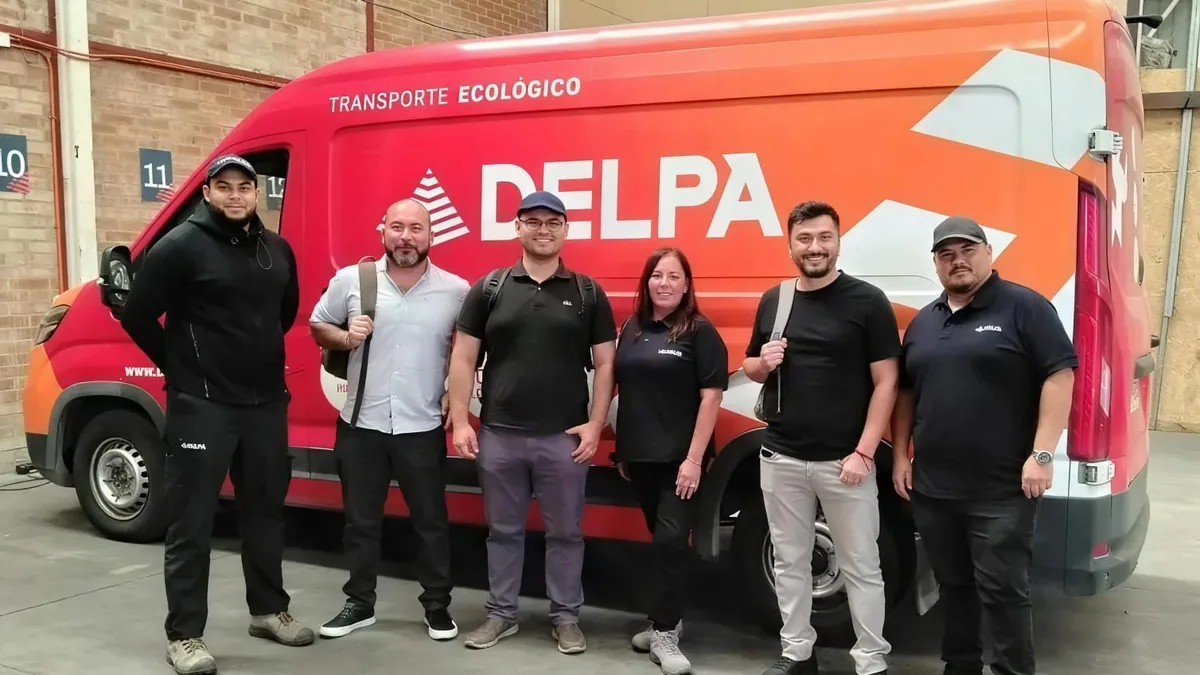
A Delpa Group team took part in the 2026 Electromobility Agreement event, held on March 25 and 26. There the company committed to renewing its fleet gradually during 2026 with two electric vans on top of the six it had in operation.
Chile's Ministry of Energy launched that edition of the agreement on March 25, 2026 with 180 member institutions. The agreement dates back to 2017, when it was created under the first National Electromobility Strategy (Ministry of Energy, 2026).
It was not the first such step. Delpa Group's membership in the Giro Limpio program and its part in the 2023-2024 agreement are covered in its commitment to electromobility and sustainability.
What Delpa Group expects from its electric fleet
In its April 2026 story, Delpa Group listed what it aims to achieve with electric vehicles in its operations.
- Lower fuel-related costs.
- More predictable operations when gasoline and diesel prices rise.
- Lower maintenance costs.
- More efficient urban operations, especially last-mile distribution.
- Care for the environment.
The company tied that decision to planning. A fleet that depends less on such a volatile input makes it easier to keep service standards when fuel prices climb.
Delpa Group has not published a total number of electric vehicles since April 2026. For the broader picture of sustainability in freight transport, Delpa Tecnología has published a guide to green logistics.
Frequently asked questions
Why does Delpa Group use electric vehicles in response to rising fuel prices?
Because diesel prices in Chile are reviewed every week. In October 2026, ENAP's estimated change for diesel added up to 186.5 pesos per liter across two reports. With its electric fleet, Delpa Group aims to lower fuel costs and run more predictable operations.
How often does the price of diesel change in Chile?
Every Wednesday ENAP publishes an estimated price report based on US Gulf Coast import prices and the rules of the Mepco stabilization mechanism. ENAP does not set retail prices. Distributors adjust the final price on their own.
How much energy does an electric delivery van use?
It depends on the model and battery. Maxus Spain's spec sheet for the eDELIVER 9 van lists 30.2 to 32.4 kWh per 100 km in the WLTP combined cycle, with a range of 186 to 296 km depending on the battery.
What did Delpa Group commit to under the 2026 Electromobility Agreement?
At the Electromobility Agreement event held on March 25 and 26, 2026, Delpa Group committed to renewing its fleet gradually during that year. The commitment is to add two electric vans to the six it had in operation in April 2026.
What changes when you run an electric delivery fleet?
Route planning around range, charging schedules and payload all change, and payload drops with larger batteries. Charging at the depot outside peak hours reduces the weight of peak demand charges on rates that include them.