Blog Cover

Moving the world:trends and insights in global logistics

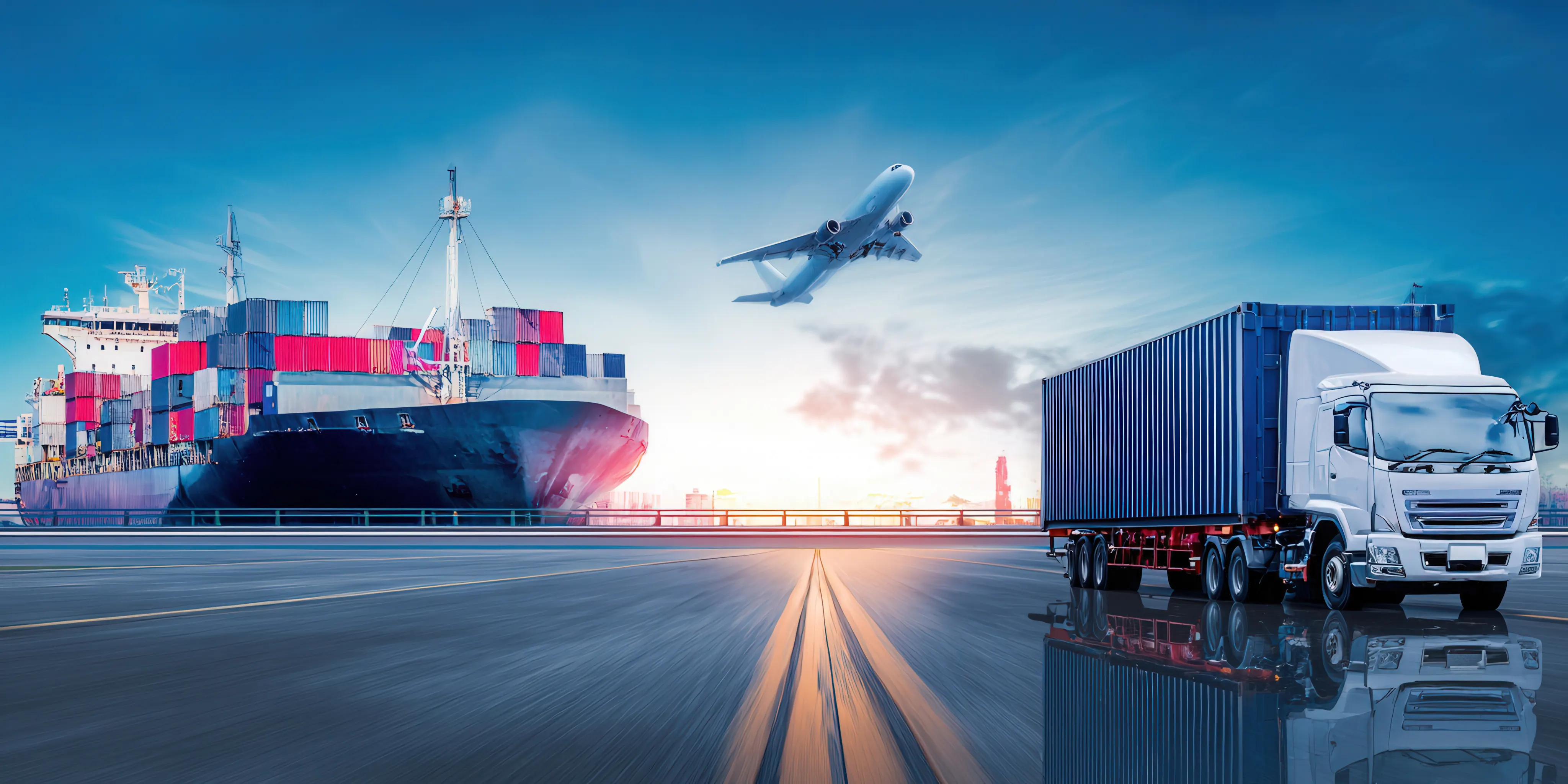
A space to explore innovation, best practices, and perspectives in maritime, land, and multimodal transport, designed for professionals seeking to optimize every stage of the logistics chain.

Blog

Portada

Omnicarrier: turning logistics into a business ally

omnicarrier
Feb 05, 2026

In many companies, logistics is experienced with constant pressure. Not because teams lack expertise, but because daily operations rely on fragmented information: endless emails, multiple providers per leg, manual tracking, and decisions made without full visibility.Over time, this friction becomes normalized. It is assumed that “this is just how logistics works.” But it shouldn’t be.Omnicarrier was born from that real discomfort. From listening to companies that needed something very concrete: order, visibility, and the peace of mind that comes from knowing their operation is under control. No more isolated tools or information dependency on third parties, but a platform that centralizes tracking, itineraries, and shipment traceability in one place, from any origin to any destination.When information is organized, the entire experience changes. Decisions stop being reactive and become intentional. Companies can compare routes, anticipate transit times, identify potential delays, and choose with real data on the table. Teams gain time, reduce errors, and work with better coordination, without relying on manual processes that no longer support growth.Omnicarrier does not aim to replace people, but to support them. It automates the tracking of ocean, air, and ground shipments, delivers real-time alerts, records every shipment event, and consolidates all information into a single platform. This allows teams to focus on what truly adds value to the business: better planning, early problem anticipation, and an improved customer experience.It also changes how companies plan ahead. Having visibility, traceability, and control over shipments enables more confident responses, less uncertainty in planning, and better preparation for an increasingly demanding logistics environment. In addition, having direct access to information strengthens companies’ position with logistics providers, without disrupting existing commercial relationships.At Delpa Group, we believe good logistics is the kind that goes unnoticed because it simply works. Omnicarrier is part of that vision: a platform designed to support companies in their daily operations, simplifying complexity and restoring control to one of the most critical areas of the business.Because when logistics is organized, everything moves forward.

Portada

Fuel pressure is back: how BAF and freight fuel surcharges work and how to protect your margin

Act
Mar 23, 2026

Updated November 9, 2026. First published March 23, 2026, at the height of the Strait of Hormuz crisis.The bunker adjustment factor (BAF) is the fuel surcharge that ocean carriers add to the freight rate to pass on changes in the price of bunker, the fuel ships burn. Many carriers calculate it with their own formula; Maersk, for example, reviews it every quarter. It is usually billed per container, either on top of the base rate or within an all-in rate.Alongside BAF there are emergency surcharges, such as the emergency bunker surcharge (EBS), which appear when fuel prices or availability move faster than the formula can track. That happened in March 2026 during the Strait of Hormuz crisis, when the first version of this article was published.This guide explains what each surcharge is, how it is calculated and announced, how to read it on a quote and how to plan for it throughout the year. It also covers Chile's Mepco, which cushions domestic diesel prices.ContentsWhat BAF is and why it existsHow the fuel surcharge is calculatedIMO 2020 and the low sulfur surchargeEmergency surcharges and the EBS of March 2026How surcharges are announced and how much notice you getHow the surcharge shows up on a freight quoteChile's Mepco and the price of dieselHow to plan fuel costs throughout the yearCargo visibility when routes changeWhat BAF is and why it existsFuel is one of the most volatile costs of running a ship. Rather than renegotiate the freight rate every time fuel prices change, carriers split that component into a surcharge that rises or falls with a market benchmark.The surcharge goes by several names. Shippers call it a bunker surcharge, a fuel surcharge or simply BAF. Maersk calls it the Fossil Fuel Fee (FFF) in its contracts and publishes the formula in a terms appendix (Maersk, accessed Nov 9, 2026).Air cargo and trucking follow the same logic, although the charge usually appears as a fuel surcharge with each carrier's own rules. This article focuses on ocean freight, where some carriers, such as Maersk, publish their formula.How the fuel surcharge is calculatedMaersk's formula is a useful way to understand the method. The surcharge is a trade factor multiplied by the weighted price of the fuels the vessel burns, based on the share of each fuel (Maersk, accessed Nov 9, 2026).Its own example uses a trade factor of 1 with 20% LSMGO at $900 and 80% VLSFO at $600. The result is a surcharge of $660.The trade factor depends on fuel consumption per loaded container and on the imbalance between the headhaul and backhaul legs. Maersk reviews it once a year, charges half the 40-foot amount on a 20-foot container and 1.5 times the dry amount on a reefer.The reference price comes from the Platts index, delivered in Rotterdam, Singapore or Balboa. Because the formula averages a period that ends before the review, the average behind the January surcharge closes on November 10.Surcharge effective fromFuel price averaging periodReview monthJanuary 1August 11 to November 10DecemberApril 1November 11 to February 10MarchJuly 1February 11 to May 10JuneOctober 1May 11 to August 10SeptemberThe table reflects the FFF terms appendix Maersk keeps published (accessed November 2026). Other carriers use different indexes, ports and timelines, so ask each one for its formula before comparing offers.IMO 2020 and the low sulfur surchargeSince January 1, 2020, the IMO 2020 rule has capped the sulfur content of ship fuel at 0.50% outside emission control areas, down from 3.50% before. Inside those areas the limit is 0.10% (IMO, 2020).That is why current formulas use VLSFO, with 0.5% sulfur, and LSMGO, with 0.1%. Some carriers billed the change as a separate low sulfur surcharge (LSS), so check that a quote does not charge the same item twice.Emergency surcharges and the EBS of March 2026An emergency surcharge covers what the regular formula cannot capture in time. In March 2026, Maersk announced a temporary emergency bunker surcharge on top of its FFF, citing the impact of the Middle East situation on access to fuel (Maersk, 2026).The carrier noted that 20% of global fuel moves through the Strait of Hormuz. It also said many refineries in the region were offline or running at reduced capacity, which forced it to redistribute fuel across its network.ContainerLong-haul headhaulLong-haul backhaul and intra-regional trades20-foot dryUSD 200USD 10040-foot dry and high cubeUSD 400USD 20020-foot reeferUSD 300USD 15040-foot reeferUSD 600USD 300The surcharge applied from March 25, 2026, subject to regulatory approvals, and from April 9 for bookings under the scope of the US Federal Maritime Commission. Maersk said it would adjust the amount up or down based on fuel availability, cost and mix.A charge like this changes without waiting for the quarterly review. Before shipping, check on the carrier's website whether its emergency surcharge is still in force and at what level.How surcharges are announced and how much notice you getCarriers publish their surcharges as rate announcements on their websites. On June 2, 2023, for example, Maersk announced the BAF that would apply from July 1, based on Bunkerworld's index and an average VLSFO price of $575.36 per ton from February 26 to May 25 (Maersk, 2023). That index and period differ from those in the FFF appendix described above.Trade with the United States has an explicit rule. No charge that increases the cost to a shipper may take effect earlier than 30 calendar days after it is published in the tariff, while decreases can take effect upon publication (eCFR, 2024).Outside that market there is no uniform notice period. That is why the clause in the quote that says whether the surcharge is fixed or follows the level in force on the shipping date matters.How the surcharge shows up on a freight quoteAn ocean freight quote can show an all-in rate or list the base rate and surcharges separately. In the second case, BAF appears as a per-container line that should be read together with its validity date.Who pays that surcharge depends on the Incoterm agreed between buyer and seller, because it defines who books the main carriage. The Incoterms guide explains how each cost is split.Quote lineWhat it coversWhat to checkBAF, FFF or bunker surchargeFuel price changes under a formulaReference period and effective dateEBS or other emergency surchargeFuel price spikes or shortages outside the formulaWhether it is temporary, its current level and next reviewLSS or low sulfur surchargeCost of low sulfur fuelThat it does not duplicate what BAF already coversGRI and PSSGeneral and peak season increases unrelated to fuelThat they are not confused with the fuel surchargeThe guide to the cost of ocean freight from China to Chile lists the most common surcharges on that lane, from BAF to THC. To compare against a real rate, you can use the Delpa Group freight quote tool.Chile's Mepco and the price of dieselOn the inland leg within Chile, the fuel that matters is diesel. The Fuel Price Stabilization Mechanism (Mepco), created by Law 20,765 of 2014, smooths domestic prices of gasoline, diesel and LPG by raising or lowering the specific fuel tax (Ministry of Finance of Chile, 2026).In March 2026, with crude prices climbing, the government adjusted the mechanism. Exempt Decree 103 of March 20 set the period used to calculate the import parity price at four weeks (CNE, 2026). In February that period was two weeks (CNE, 2026).For March 26, a diesel increase of 580 pesos per liter was projected (El País, 2026). That figure was a press projection, not an official price.The pressure has not gone away. The diesel parity price set for November 5, 2026 is 1,323,271 pesos per cubic meter (CNE, 2026), 2.3 times the 581,417 pesos of February 5 (CNE, 2026).The parity price is the import benchmark, not the pump price. Even so, it helps explain why trucking companies may revise their rates or add a fuel surcharge to domestic freight.How to plan fuel costs throughout the yearThe first step is to separate confirmed costs from contingent ones. The base rate and the current BAF are known, while an emergency surcharge or a diversion should be budgeted as scenarios.The second is to use the review calendar. If the carrier publishes its formula, the average for the reference period lets you estimate the next surcharge before it is announced.The third is to audit open quotes when the market moves. An offer issued on assumptions that no longer hold can turn a profitable deal into a loss.It also helps to align sales and operations so the customer hears one consistent message. Customers usually ask whether the cargo will arrive, whether there will be delays and whether the price will change again.Diversions also stretch the time containers spend at port or with the customer. In that case, review how demurrage and detention charges are billed so they do not land on top of the fuel surcharge without warning.Cargo visibility when routes changeWhen a carrier diverts a vessel or changes the transshipment port, the arrival date moves and the related costs move with it. Knowing early lets you warn the customer before they ask.Tools such as OmniCarrier, from Delpa Tecnología, centralize multimodal cargo tracking in a single platform with automatic alerts. Teams can spot delays without checking shipping line, airline and courier portals one by one.If your operation needs support moving cargo by sea, see the Delpa Group ocean freight service, backed by more than 30 years of experience.Frequently asked questionsWhat is BAF in ocean freight?BAF, or bunker adjustment factor, is the fuel surcharge a carrier adds to the base ocean freight rate. It rises or falls with the price of ship fuel. Many carriers calculate it with their own formula; Maersk, for example, reviews it every quarter.How often does BAF change?It depends on the carrier. Under Maersk's formula, the fuel surcharge is reviewed every quarter using the average price of a period that closes before the review. Other carriers use different timelines and indexes, so ask for the formula in writing.What is the difference between BAF and EBS?BAF is the regular fuel surcharge, calculated with a periodic formula. EBS, or emergency bunker surcharge, is a temporary charge carriers add when fuel prices rise or supply tightens faster than that formula can track, as happened in March 2026 during the Strait of Hormuz crisis.Is BAF included in the freight rate?It can be included or listed separately. Some quotes show an all-in rate and others split the base rate from the surcharges. Check whether the offer fixes the BAF or applies the level in force on the shipping date, because that changes the final cost.How much notice must carriers give before raising a surcharge?In US trades, federal regulation requires that any charge that increases the cost to a shipper take effect no earlier than 30 calendar days after publication. Other markets have no uniform notice period, so the quote should state the rule that applies.What is Mepco and how does it affect transport in Chile?Mepco is the mechanism created by Chilean Law 20,765 of 2014 that smooths domestic price swings for gasoline, diesel and LPG through the specific fuel tax. It affects the cost of the diesel that trucks use inside Chile.How can an importer protect itself from fuel surcharges?By separating confirmed from contingent costs, following each carrier's review calendar, auditing open quotes when the market moves and getting the surcharge rule in writing. Shipment visibility also helps anticipate diversions and delays.
Portada

Electromobility at Delpa Group: a concrete strategy against rising fuel prices

Act
Apr 09, 2026

Fleet electrification is the concrete response Delpa Group chose to rising fuel prices in its distribution within Chile. In April 2026 the company reported six electric vans in operation and a commitment to add two more that year, made under Chile's Electromobility Agreement.This article explains what changes in cost and operations when a delivery fleet moves away from diesel. It draws on weekly reports from ENAP, Chile's state oil company, electricity regulation from the National Energy Commission (CNE) and the spec sheet of an electric delivery van sold in Spain (Maxus eDELIVER 9), with the date of each figure.ContentsDiesel prices in Chile are reviewed every weekFrom price per liter to cost per kilometerElectricity rates are set every six months, and charging time matters tooWhat changes when a delivery fleet goes electricMarch 2026: the Electromobility Agreement and two more vansWhat Delpa Group expects from its electric fleetDiesel prices in Chile are reviewed every weekEvery Wednesday ENAP publishes a report of estimated fuel prices. The estimate takes into account import prices on the US Gulf Coast, the cost of shipping fuel to Chile and the rules of the Mepco and FEPP stabilization mechanisms (ENAP, 2026).ENAP makes clear that it does not set retail prices. Distributors adjust the final price on their own, based on that report.In the September 30, 2026 report, the estimated change in diesel was 95 Chilean pesos per liter. The October 21 report added another 91.5 pesos per liter, while the November 4 report showed no change (ENAP, 2026).Those two estimated changes add up to 186.5 pesos per liter in three weeks. How the Mepco works and how fuel costs pass into freight rates is covered in how to protect your margin as fuel pressure returns.The exposure has a clear source. "Chile imports about 95% of the crude it consumes," wrote Sebastián Luque, CEO of Enerlink, in an April 2026 column (BioBioChile, 2026).From price per liter to cost per kilometerFor a delivery fleet, the number that matters is energy cost per kilometer. You get it by dividing the energy price by the vehicle's efficiency, in kilometers per liter for diesel or kilometers per kilowatt-hour for electric.With a diesel van that does 10 kilometers per liter, an example assumption, every 10-peso increase per liter adds 1 peso per kilometer. ENAP's estimated changes for October 2026 amount to roughly 18.7 more pesos for every kilometer driven.On the electric side, Maxus Spain's spec sheet for the eDELIVER 9 van lists consumption of 30.2 to 32.4 kWh per 100 km in the WLTP combined cycle. At that consumption, cost per kilometer depends mainly on the contracted rate and the time of charging.VariableDiesel vanElectric vanEnergy unitLiter of dieselKilowatt-hour (kWh)Reference price reviewWeekly, ENAP reportEvery six months for regulated customers, CNEReference consumption10 km per liter (example assumption)30.2 to 32.4 kWh per 100 km (maker's spec sheet)Recent reference+186.5 pesos per liter in ENAP's estimated change (effective October 1 and 22, 2026)Node price set every six months for regulated customers (CNE)Effect on cost per kmAbout 18.7 more pesos per km at 10 km per literDepends on the contracted rate and charging timeThe table does not compare absolute prices, which depend on each company's contract. It shows how often the reference for each energy source changes, which is what drives cost predictability.Electricity rates are set every six months, and charging time matters tooChile's National Energy Commission sets regulated electricity prices every six months. In October 2026 it published the preliminary technical report on the average node price for the first half of 2027 (CNE, 2026).That gives regulated electricity a six-month horizon, compared with the weekly review of diesel. Predictability is higher but not complete, because a company may be on an unregulated rate or one with demand charges.In his column, Sebastián Luque explains that the cost of energy depends heavily on peak consumption recorded during peak hours. At a little-used charging station, that can triple the cost per kilowatt-hour compared with a high-demand one (BioBioChile, 2026).For a delivery fleet, the practical takeaway is to charge at the depot outside peak hours. The eDELIVER 9 spec sheet lists 7 to 12 hours for a full AC charge, or 36 to 45 minutes to reach 80% with fast charging.What changes when a delivery fleet goes electricRange becomes a planning variable. According to Maxus's spec sheet for the version sold in Spain, the eDELIVER 9 covers 186 to 296 km (about 116 to 184 miles) in the WLTP combined cycle depending on the battery, although the configuration may vary by market. Routes are built to return to the depot before the battery runs out.The battery also affects payload. On the long body (L3H2), the spec sheet gives a 1,160 kg payload with the 52 kWh battery versus 860 kg with the 89 kWh one.That is why urban delivery is where an electric fleet fits most easily. Routes are short and repetitive, with frequent stops and a daily return to the warehouse.How Delpa Group added its first last-mile electric vehicles is described in its investment in electric vehicles for last-mile logistics. The current service is described on the national distribution and last-mile page, and the last-mile guide covers the final leg of delivery.March 2026: the Electromobility Agreement and two more vansA Delpa Group team took part in the 2026 Electromobility Agreement event, held on March 25 and 26. There the company committed to renewing its fleet gradually during 2026 with two electric vans on top of the six it had in operation.Chile's Ministry of Energy launched that edition of the agreement on March 25, 2026 with 180 member institutions. The agreement dates back to 2017, when it was created under the first National Electromobility Strategy (Ministry of Energy, 2026).It was not the first such step. Delpa Group's membership in the Giro Limpio program and its part in the 2023-2024 agreement are covered in its commitment to electromobility and sustainability.What Delpa Group expects from its electric fleetIn its April 2026 story, Delpa Group listed what it aims to achieve with electric vehicles in its operations.Lower fuel-related costs.More predictable operations when gasoline and diesel prices rise.Lower maintenance costs.More efficient urban operations, especially last-mile distribution.Care for the environment.The company tied that decision to planning. A fleet that depends less on such a volatile input makes it easier to keep service standards when fuel prices climb.Delpa Group has not published a total number of electric vehicles since April 2026. For the broader picture of sustainability in freight transport, Delpa Tecnología has published a guide to green logistics.Frequently asked questionsWhy does Delpa Group use electric vehicles in response to rising fuel prices?Because diesel prices in Chile are reviewed every week. In October 2026, ENAP's estimated change for diesel added up to 186.5 pesos per liter across two reports. With its electric fleet, Delpa Group aims to lower fuel costs and run more predictable operations.How often does the price of diesel change in Chile?Every Wednesday ENAP publishes an estimated price report based on US Gulf Coast import prices and the rules of the Mepco stabilization mechanism. ENAP does not set retail prices. Distributors adjust the final price on their own.How much energy does an electric delivery van use?It depends on the model and battery. Maxus Spain's spec sheet for the eDELIVER 9 van lists 30.2 to 32.4 kWh per 100 km in the WLTP combined cycle, with a range of 186 to 296 km depending on the battery.What did Delpa Group commit to under the 2026 Electromobility Agreement?At the Electromobility Agreement event held on March 25 and 26, 2026, Delpa Group committed to renewing its fleet gradually during that year. The commitment is to add two electric vans to the six it had in operation in April 2026.What changes when you run an electric delivery fleet?Route planning around range, charging schedules and payload all change, and payload drops with larger batteries. Charging at the depot outside peak hours reduces the weight of peak demand charges on rates that include them.

Delpa Group - Soluciones tecnol\u00f3gicas log\u00edsticas

A logistics and software ecosystem designed for companies that move the world

We are a Freight Forwarder with over 30 years of experience and our own technological capabilities. From international cargo to route optimization, TMS, multimodal tracking and CO2 measurement, we connect all the points in your logistics chain in one place.

Delpa Suite
Optimize routes and manage deliveries in real time
Last mile platform with intelligent routing, live tracking, driver app and operational analytics.
OMNICARRIER
TMS to control your entire transport chain
Online tracking, schedules and notifications from shipping lines, airlines, trucks and courier. All centralized on a single platform in real time.
MOVING TRUCK
Digital land transport management
Assign trips, control fleets, manage truck availability and enable operational tracking for customers.
IA AUTOMATIONS
Logistics automation with AI
Operational virtual agents that reduce man hours: container tracking, alarms, reports, booking sync and intelligent workflows.
CARBON TRACKER
Measure and reduce the CO2 footprint of your logistics
Calculate emissions by route, mode and carrier. ESG reports, dashboards and automatic recommendations for reduction.
Delpa Group Logo

Find us on our social networks

All rights reserved Delpa Group 2026Sociedad De Inversiones Sudamérica SpaWebsite by Neterius